By Michael Slackman
The New York Times
September 29, 2009
CAIRO — For days after Egypt’s culture minister, Farouk Hosny, failed in his bid to lead the United Nations Educational, Scientific and Cultural Organization, Egyptian newspapers and government officials presented the defeat as a sign of Western prejudice against Islam and the Arab world, the product of an international Jewish conspiracy.
“America, Europe and the Jewish lobby brought down Farouk Hosni,” read a headline in an independent daily newspaper, Al Masry Al Yom. The foreign minister, Ahmed Aboul Gheit, criticized “international Judaism and Western powers” in a television interview. Mr. Hosny himself helped stoke those sentiments, saying, “There was a group of the world’s Jews who had a major influence in the elections who were a serious threat to Egypt taking this position.”
All of Egypt, indeed all of the Arab world, was talking with one voice of outrage and insult. Or so it seemed.
While no one here would argue that Israel and its supporters played no role in Mr. Hosny’s defeat to a Bulgarian diplomat, many people said that his failure was at least as much a sign of Egypt’s long, slow slide as the center of Arab culture, thought and influence. They said the defeat might represent a rejection of Muslims and Arabs, but perhaps more importantly a rejection of their authoritarian leaders.
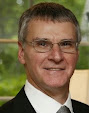
Mr. Hosny, a favorite of President Hosni Mubarak, was roundly despised by many members of the nation’s cultural elite, who say he did little or nothing in his 22 years as culture minister to encourage cultural development and did much, particularly through the enforcement of strict government censorship, to stunt it.
In the independent newspaper Shorouk, Fahmy Howeidy wrote: “I am not exaggerating when I say that the failure of Mr. Farouk Hosny is not due to his hostility against Israel, as it was said, but the important reason that contributed to his failure is he represents a country that ranks among the politically failed states, where a monopoly of power and governing the state under emergency rule for more than a quarter of a century, where it suppresses public freedom, affects the image of its candidate.”
The defeat provoked a degree of quiet soul-searching here. The state’s retreat to anti-Zionism and to some extent, anti-Semitism, underscored for many here the region’s collective political impotence, a failure of Arab leaders to form a powerful regional bloc capable of winning support from power brokers in Washington, London or Paris that has lasted decades.
The pan-Arab daily newspaper Al Quds Al Arabi wrote that Mr. Hosny’s loss “comes as yet another confirmation of the Arab world’s — and Egypt’s in particular — backslide on the international arena, and the general lack of respect towards it in all areas, not exclusively culture.”
Mr. Hosny, 71, is a well-known figure in Egypt. He has been the minister for more than two decades. Oddly enough, considering the charges of anti-Semitism that derailed his candidacy, he has never been known as a strong opponent of normalizing ties with Israel.
True, he has resisted a warm peace, refused to visit Tel Aviv and was quoted as saying that he would burn Israeli books if he found them in a library. But proponents say he took these actions as the bare minimum to defend himself from a population that views Israel as the enemy.
Throughout his candidacy, Mr. Hosny struggled to mute the charges of anti-Semitism, efforts that caused many people in Egypt to wince as they watched a stalwart of the state apologize, to Israel no less. And they winced again, when he blamed a Jewish-Zionist conspiracy for his loss.
“He did not take an anti-normalization stand until the end,” said Hossam el-Hamalawy, an independent Egyptian blogger and journalist. “The moment he lost he came back and started saying some of the most foul anti-Semitic statements against the Jews, confirming what the West had said about him.”
Mr. Hosny lost his bid for Unesco, but tried to turn that into a victory at home, returning as a victim, and for the state-run media a hero. The charges of a Western, Jewish-Zionist conspiracy may have been amplified by a government eager to limit its embarrassment after having staked its credibility on Mr. Hosny.
But they are not new, said Hala Mustafa, editor in chief of the weekly magazine Democracy and a member of Mr. Mubarak’s governing party. When it comes to domestic politics, she said, Egyptian officials often try to present themselves as anti-Israeli, even while serving as a mediator between Israel and the Palestinians.
Ms. Mustafa has been squeezed by that dual identity.
In her capacity as an editor and academic in the state-financed Ahram Center, she recently met with Israel’s ambassador to Egypt, Shalom Cohen. She has since been tarred in the press as a “normalizer,” and the Egyptian Journalists Syndicate has tried to blacklist her. Ms. Mustafa said she saw the state’s rush to blame Israel for Mr. Hosny’s loss as stemming from the same forces busy attacking her.
“We have been under this propaganda for 30 years,” she said. “Like Egypt doesn’t have a peace treaty with Israel? Like Egypt does not play a peace role between Israel and the Palestinians? If that is Egypt’s role, why are we not allowed to play the same role?”
There is another view, too, one that was published in English, allowing, perhaps for a degree of candor not found in the Arabic news media. Writing in the English-language Daily News, the chief editor, Rania al-Malky, suggested that Mr. Hosny might have done as well as he did because he was Arab and Muslim, not because he was qualified. His defeat, she wrote, should not surprise anyone.
“I will say this at the risk of being branded unpatriotic, but no matter where you stand on the political spectrum,” she wrote, “you must admit that the Egyptian administration did not deserve to win this bid. How can a 22-year minister of a country where culture, education, health and science have regressed to the Dark Ages become the head of Unesco?”
Mona El-Naggar contributed reporting.
Showing posts with label conspiracy theories. Show all posts
Showing posts with label conspiracy theories. Show all posts
Monday, October 12, 2009

Hosni and the Zionist Plot
By Abdul Rahman Al-Rashed
Asharq Al-Awsat (London)
October 10, 2009
Following the Egyptian Minister of Culture Farouk Hosni’s failed bid to head UNESCO, many people stated that this loss was a catastrophe and blamed it on an international Zionist plot, even though it was nothing more than competition for an international position.
The following week, US President Barack Obama received a real blow when the city of Chicago lost the competition to host the 2016 Olympic Games to Rio de Janeiro in Brazil.
Barack Obama made a personal visit to Copenhagen, Denmark, together with some influential personalities and media figures to support the Chicago bid for the Olympics. However, he returned home in his giant jet disappointed. “You can play a great game and still not win…” Obama said. He did not call it a conspiracy and place the blame on others even though he is the most powerful president in the world in terms of influence, and his country’s chances of hosting the international Olympic Games were higher by virtue of Chicago’s sports facilities and its huge financial resources in comparison to the other three competing cities. Obama lost simply because this time the majority voted for another country and this is the kind of thing that happens in any competition.
What I mean is that after years of experiencing the same thing over and over, we still insist on giving Israel a title it does not deserve and that title is the “force majeure” of all Arabs. Anybody who knows public work, including political work, must be aware that Israel’s assumed capability is a false notion including the defeat of Minister Hosni, which was nothing more than a competition that could have been lost by the best candidate.
The belief that the Egyptian Minister of Culture’s failure to win the UNESCO position is a catastrophe belittles Egypt as well, as it is too big a state to value itself on a temporary post. In the same way, this also exaggerates the value of the UNESCO post, as it is merely a cultural organization that cannot be compared to the UN or the International Atomic Energy Agency (IAEA), which is headed by an Egyptian.
I read some of what was written about Minister Hosni and the false accusations cast against him of hatred and book burning and this is nothing more than the opinions of some people that every minister, or anyone in a public position, should be used to. As for voting for the UNESCO position, this was political action being practiced and in most cases it is subject to each country’s considerations. But to accuse Israel of being behind it means we would be awarding Israel a championship medal it does not deserve.
We should be used to defeats as long as we aspire to win; this is part of life, unless we choose to stay at home and refrain from entering competitions, in which case there would be no winners or losers.
Egypt is the most populated Arab country, and one of the developing countries with the most figures assuming international posts even though the country is not the biggest in terms of size or population, or richest in natural resources. This in itself is enough to make one feel satisfied rather than bitter or angry. As for Israel — which is great in our eyes only — its figures have not assumed a single international post at any organization in its entire history.
Abdul Rahman Al-Rashed is general manager of Al-Arabiya television and former editor-in-chief of Asharq Al-Awsat.
Asharq Al-Awsat (London)
October 10, 2009
Following the Egyptian Minister of Culture Farouk Hosni’s failed bid to head UNESCO, many people stated that this loss was a catastrophe and blamed it on an international Zionist plot, even though it was nothing more than competition for an international position.
The following week, US President Barack Obama received a real blow when the city of Chicago lost the competition to host the 2016 Olympic Games to Rio de Janeiro in Brazil.
Barack Obama made a personal visit to Copenhagen, Denmark, together with some influential personalities and media figures to support the Chicago bid for the Olympics. However, he returned home in his giant jet disappointed. “You can play a great game and still not win…” Obama said. He did not call it a conspiracy and place the blame on others even though he is the most powerful president in the world in terms of influence, and his country’s chances of hosting the international Olympic Games were higher by virtue of Chicago’s sports facilities and its huge financial resources in comparison to the other three competing cities. Obama lost simply because this time the majority voted for another country and this is the kind of thing that happens in any competition.
What I mean is that after years of experiencing the same thing over and over, we still insist on giving Israel a title it does not deserve and that title is the “force majeure” of all Arabs. Anybody who knows public work, including political work, must be aware that Israel’s assumed capability is a false notion including the defeat of Minister Hosni, which was nothing more than a competition that could have been lost by the best candidate.
The belief that the Egyptian Minister of Culture’s failure to win the UNESCO position is a catastrophe belittles Egypt as well, as it is too big a state to value itself on a temporary post. In the same way, this also exaggerates the value of the UNESCO post, as it is merely a cultural organization that cannot be compared to the UN or the International Atomic Energy Agency (IAEA), which is headed by an Egyptian.
I read some of what was written about Minister Hosni and the false accusations cast against him of hatred and book burning and this is nothing more than the opinions of some people that every minister, or anyone in a public position, should be used to. As for voting for the UNESCO position, this was political action being practiced and in most cases it is subject to each country’s considerations. But to accuse Israel of being behind it means we would be awarding Israel a championship medal it does not deserve.
We should be used to defeats as long as we aspire to win; this is part of life, unless we choose to stay at home and refrain from entering competitions, in which case there would be no winners or losers.
Egypt is the most populated Arab country, and one of the developing countries with the most figures assuming international posts even though the country is not the biggest in terms of size or population, or richest in natural resources. This in itself is enough to make one feel satisfied rather than bitter or angry. As for Israel — which is great in our eyes only — its figures have not assumed a single international post at any organization in its entire history.
Abdul Rahman Al-Rashed is general manager of Al-Arabiya television and former editor-in-chief of Asharq Al-Awsat.
Tuesday, September 15, 2009
'Jews harvesting Algerian kids' organs' (and my comments)
By Haviv Rettig Gur
The Jerusalem Post (Israel)
September 14, 2009
The anti-Semitic blogosphere and many Arab and Muslim media outlets are aflutter in recent days over accusations of an international Jewish conspiracy to kidnap Algerian children and harvest their organs.
Unlike the multiple conspiracy theories about Jews circulating among radical fringe organizations online, this one seems to be gaining momentum on mainstream Arab and Muslim Web sites.
According to the story, first reported by Algeria's Al-Khabar daily, bands of Moroccans and Algerians have allegedly been roaming the streets of Algeria's cities kidnapping young children, who are then transported across the border into Morocco. From the Moroccan city of Oujda, the children are then purportedly sold to Israelis and American Jews, who then harvest their organs for sale in Israel and the United States. The organs are said to fetch anywhere from $20,000 to $100,000.
The source for the Al-Khabar report seems to be a Dr. Mustafa Khayatti, head of the Algerian National Committee for the Development of Health Research. Khayatti reportedly claimed that several Jews were arrested in New York in connection with the trade. He claimed Interpol knew of the situation and was leading the investigation into the abductions.
"The arrest of Jewish organ trafficking gangs does not mean that the danger has gone; top officials and specialists in this issue assert that there are other Jewish gangs who remain active in several Arab countries," Khayatti was quoted as saying.
Picking up on the Algerian report, the official Iranian news agency PressTV claimed that the Jewish group "is said to be connected to Israeli Rabbi Levi Rosenbaum, who was recently arrested in New Jersey for the direct involvement in importing human organs."
The report also ran without scrutiny on certain American news outlets, including the Web site of the California-based American Arab weekly Watan.
With its rapid online dissemination, the report has begun to draw fire from those worried about the ease with which such a story, lacking any evidence, can spread in the Muslim world.
The report "sounds as [though] Dr. Khayatti is well connected within the FBI and has access to Interpol documents," but this was not the case, wrote Hassan Masiky, a reporter for the American Moroccan news service MoroccoBoard.com.
"Needless to say, neither Al-Khabar nor PressTV provided a source for their story, other than an obscure low-level Algerian bureaucrat," Masiky complained.
"What is dangerous in this work of fantasy is the plot to package the true story of the arrest of Rabbi Levi Rosenbaum in New Jersey with the nonsense, nightmarish tale out of Algeria," he said.
Masiky noted that the Algerian-Moroccan border was closed and carefully watched by the countries' armies. It was therefore difficult to ascertain how such a plan could be implemented without help from the Algerian state.
"To their credit, the Algerian authorities, up until now, did not ask their Moroccan counterparts for an official investigation, as most Algerians ask themselves: Who are these kidnapped children? Where are their parents? Who conducts these organ harvesting operations? How are the children and the organs transported from Morocco to Israel? And more importantly, how can the Algerian army allow such illicit traffic to go unabated?" Masiky wrote.
The Iranian PressTV noted in its coverage that the report followed claims made in the Swedish newspaper Aftonbladet last month of an IDF conspiracy to harvest organs from kidnapped Palestinians.
The connection indicated "a possible link between the Israeli military and the mafia of human organs detected in the US," the Iranian report said.
Aftonbladet, too, did not offer evidence in its article, relying on claims by a handful of Palestinians who spoke to the reporter.
Mark says:
Conspiracy theory begets conspiracy theory and the webs that are weaved are not the "conspiracies" but instead are the "connections" and "facts" that are mustered to support these theories. "Evidence" is made up and inconvenient facts are ignored. And proponents and supporters and weavers of conspiracy theories follow the classic courtroom strategy:
If you can't argue the facts, argue the law. If you can't argue the law, attack the plaintiff or witness.
Note the language quoted from the "reports" in this article:
Dr. Mustafa Khayatti "claimed..." (On what basis and what evidence? None is provided.)
"Top officials and specialists in this issue assert..." (Who are those "top officials" and "specialists"?)
"...is said to be..." (Who said?)
Conspiracy mongers are particularly fond of using the passive tense, not only because their writing skills usually leave something to be desired but because it allows for passivity in thinking and logic and adds to the deliberate vagueness of "evidence" to support the claims of conspiracies.
But let us also be clear. In the case of what turned out to be a real conspiracy — Iran-Contra back in the late 1980s — President Reagan famously excused it with an exquisite use of passive language: "Mistakes were made." Apparently those "mistakes" were self-created out of thin air and therefore no one was responsible.
The Jerusalem Post (Israel)
September 14, 2009
The anti-Semitic blogosphere and many Arab and Muslim media outlets are aflutter in recent days over accusations of an international Jewish conspiracy to kidnap Algerian children and harvest their organs.
Unlike the multiple conspiracy theories about Jews circulating among radical fringe organizations online, this one seems to be gaining momentum on mainstream Arab and Muslim Web sites.
According to the story, first reported by Algeria's Al-Khabar daily, bands of Moroccans and Algerians have allegedly been roaming the streets of Algeria's cities kidnapping young children, who are then transported across the border into Morocco. From the Moroccan city of Oujda, the children are then purportedly sold to Israelis and American Jews, who then harvest their organs for sale in Israel and the United States. The organs are said to fetch anywhere from $20,000 to $100,000.
The source for the Al-Khabar report seems to be a Dr. Mustafa Khayatti, head of the Algerian National Committee for the Development of Health Research. Khayatti reportedly claimed that several Jews were arrested in New York in connection with the trade. He claimed Interpol knew of the situation and was leading the investigation into the abductions.
"The arrest of Jewish organ trafficking gangs does not mean that the danger has gone; top officials and specialists in this issue assert that there are other Jewish gangs who remain active in several Arab countries," Khayatti was quoted as saying.
Picking up on the Algerian report, the official Iranian news agency PressTV claimed that the Jewish group "is said to be connected to Israeli Rabbi Levi Rosenbaum, who was recently arrested in New Jersey for the direct involvement in importing human organs."
The report also ran without scrutiny on certain American news outlets, including the Web site of the California-based American Arab weekly Watan.
With its rapid online dissemination, the report has begun to draw fire from those worried about the ease with which such a story, lacking any evidence, can spread in the Muslim world.
The report "sounds as [though] Dr. Khayatti is well connected within the FBI and has access to Interpol documents," but this was not the case, wrote Hassan Masiky, a reporter for the American Moroccan news service MoroccoBoard.com.
"Needless to say, neither Al-Khabar nor PressTV provided a source for their story, other than an obscure low-level Algerian bureaucrat," Masiky complained.
"What is dangerous in this work of fantasy is the plot to package the true story of the arrest of Rabbi Levi Rosenbaum in New Jersey with the nonsense, nightmarish tale out of Algeria," he said.
Masiky noted that the Algerian-Moroccan border was closed and carefully watched by the countries' armies. It was therefore difficult to ascertain how such a plan could be implemented without help from the Algerian state.
"To their credit, the Algerian authorities, up until now, did not ask their Moroccan counterparts for an official investigation, as most Algerians ask themselves: Who are these kidnapped children? Where are their parents? Who conducts these organ harvesting operations? How are the children and the organs transported from Morocco to Israel? And more importantly, how can the Algerian army allow such illicit traffic to go unabated?" Masiky wrote.
The Iranian PressTV noted in its coverage that the report followed claims made in the Swedish newspaper Aftonbladet last month of an IDF conspiracy to harvest organs from kidnapped Palestinians.
The connection indicated "a possible link between the Israeli military and the mafia of human organs detected in the US," the Iranian report said.
Aftonbladet, too, did not offer evidence in its article, relying on claims by a handful of Palestinians who spoke to the reporter.
Mark says:
Conspiracy theory begets conspiracy theory and the webs that are weaved are not the "conspiracies" but instead are the "connections" and "facts" that are mustered to support these theories. "Evidence" is made up and inconvenient facts are ignored. And proponents and supporters and weavers of conspiracy theories follow the classic courtroom strategy:
If you can't argue the facts, argue the law. If you can't argue the law, attack the plaintiff or witness.
Note the language quoted from the "reports" in this article:
Dr. Mustafa Khayatti "claimed..." (On what basis and what evidence? None is provided.)
"Top officials and specialists in this issue assert..." (Who are those "top officials" and "specialists"?)
"...is said to be..." (Who said?)
Conspiracy mongers are particularly fond of using the passive tense, not only because their writing skills usually leave something to be desired but because it allows for passivity in thinking and logic and adds to the deliberate vagueness of "evidence" to support the claims of conspiracies.
But let us also be clear. In the case of what turned out to be a real conspiracy — Iran-Contra back in the late 1980s — President Reagan famously excused it with an exquisite use of passive language: "Mistakes were made." Apparently those "mistakes" were self-created out of thin air and therefore no one was responsible.
Thursday, September 10, 2009
They Feed Our Illusions (and my comments)
By Mshari Al-Zaydi
Asharq Alawsat (London)
September 9, 2009
Those who carried out the 11 September 2001 attacks, were they extremist Serbian nationalists, no it was the Israeli Mossad, no, pardon me, it was a US group of Seventh Day Adventists! Not at all, the one who carried out the terrible attacks was the US Central Intelligence Agency [CIA]!
The suggestions and imaginary illusions continue to pour in the direction of evading the real consequences of the reality, which is that those who carried out the 11 September attacks were Muslim youths who believe in a hard-line interpretation of Islam, who are led by Osama Bin Laden, and who are encouraged and were then encouraged by millions of Muslims.
The idea that the Serbs were the ones who carried out the 11 September attacks to take revenge for US interference in the Serbs' war against Bosnia and the Croats was pronounced by Hasanayn Haykal, symbol of Arab political journalists who follow the pan-Arab direction. He said it days after the explosions took place (Lebanese Al-Safir newspaper 1 October 2001).
The idea that the attacks were carried out by the Israeli Mossad (the source of all evils and mysterious events that some people do not have the stamina to investigate and scrutinize) was suggested by the Islamist writer Fahmi Huwaydi, who believed that Al-Qaeda could not carry out such an operation, but the Mossad could (Kuwaiti Al-Watan newspaper 25 September 2001).
As for the idea that the explosions were carried out by a US group called the Seventh Day Adventists, it was pronounced by the presenter of the Science and Belief program, Mustafa Mahmud (Al-Ahram 22 September 2001).
All these suggestions and scenarios indicate the extent of the control of wishful thinking over us. This is because the common factor among all these ideas is to put the responsibility on the shoulders of a party other than the Arab and Muslim party, i.e., a party that is not us. I remember that there were some who spoke of the involvement of the Colombian drug cartels in these attacks. What is important is that the involved side is someone other than us, even if this one is a blue jinn. The owners of these suggestions do not burden themselves with thinking of the events and analyzing them in order to reach the closest possible point to the truth, as the researcher Saqr Abu-Fakhr says in his book, "Religion and the Mob."
From this we can understand the enthusiastic celebrations with which our Arab media, and our semi- and even quarter-intellectuals met the delusions of the French journalist Thierry Missan that what took place on 11 September was merely a "terrifying deception" carried out by the United States itself, and hence it killed 5,000 people, and bombed the Defense Department building and the World Trade Center twin towers!
The main purpose of all these contorted ideas is to kill the questions, and to exonerate the cultural self from responsibility. If the ones who carried out these explosions were Serbs, Mossad, Seventh Day Adventists, Colombian gangs, or the CIA, it would be meaningless to question us about extremism, the culture of fanaticism and religious excess, the need to revise the concepts that establish religious violence, and all this continuous headache of questions that keep hammering on the mind of the society. The matter is easy with these conspiratorial illusions, and presenting critical questions becomes meaningless "intellectual luxury" and verbosity.
With these images, the entire issue is reduced to saying that there are conspiracies that no one knows about except those in the know, but we are a perfect nation with a healthy society, culture, and civilization (where are all these now?!). However, we are targeted and warred upon. We are the main preoccupation of the world. The world wants to oppress us, prevent us from rising, and rob our wealth.
Conspiracy is neither an illusion nor an abstract idea; it is part of the world of politics, and it has happened, and still is happening. The aim is not to deny its existence or to ridicule that it has taken place at certain periods and in specific cases, and that it will take place again, because conspiracy is a part of the practice of political wars. Many people in the world are obsessed by the conspiracy theories, and there are films and novels about this group of people, who do not see anything in front of them other than a conspiracy or a potential conspiracy.
However, in the societies that are free from injured pride, historic-role complex, and regrets of being backward in civilization, they do not allow such group of people to undertake the decision making in important and sensitive issues; in these societies such issues are studied with complete, or as close as possible to complete, objectivity in order to protect the state and the decision making from the impact of fleeting emotional feelings. Even if some hysterical people, such as the journalist Thierry Missan, were to emerge at certain times, as a fleeting fit of hysteria, they soon would fade away in the sea of the ruling rationalism.
However, our situation is the opposite of their situation. We continuously enable these people, listen to them, and rely on anything that anyone says that would tickle our sentiments, and inflame our imagination with sensational conspiracies. The defeat of 1967 was a foreign conspiracy, so were the 1956 aggression and the 1948 catastrophe. The appointment of Anwar al-Sadat as president of Egypt was a conspiracy. Saddam's invasion of Kuwait was a conspiracy, and the West deliberately enticed Saddam into it. Osama Bin Laden is a conspiracy. All the religious fanaticism, and the dozens, even hundreds of suicide bombers, who flood our land with blood and torn bodies, are nothing but tools of a conspiracy that is managed from abroad (the nature and type of this abroad vary according to the prevailing circumstances and enemies).
This type of thinking reflects a deep-rooted perplexity, and a continuous fear of facing up to the naked truth. It is true that facing up to the truth is bitter and painful, but this is temporary bitterness and pain that soon will go away, and putting up with this is better and more beneficial than resorting to intellectual drugs and evasion tricks.
Does this mean self-hatred and shedding one's identity and culture? This question is meaningless, because man cannot shed his skin; if he did he would turn into an appalling freak, or perhaps he would die completely, because the skin is what protects the body, and hence the soul that uses the parts of the body.
Therefore, this question, which is presented always whenever the idea of self-criticism is put forward, is meaningless. If our problem with our prevailing way of thinking were restricted to the 11 September explosions, the situation would be easy, and we would believe the conspiracy theories, be they the Serbian scenario, the Mossad scenario, the Colombian scenario, or even the blue jinn scenario. However, our problem has not been restricted to the story of 11 September. Before and after the 11 September events we have gone through dozens of crises that have led us to this reality, which I do not think pleases any rational Muslim or Arab.
In a nutshell: The solution before we go through any talk or sidelines is that if we do not change our way of thinking we will continue to repeat these saddening distractions in an absurd and tragic way. We repeat the same words at every problem. It is said that you will not get a different result if you are using the same method!
I say these words as in a few days we will commemorate the eighth anniversary of 11 September 2001. We will remember that many of us celebrated it and its deeds, while at the same time the ideas of the conspiracy and the foreign side became widespread. I do not know how we can take pride in a deed, and at the same time we are pleased that someone tells us that there are foreign sides that did that deed, and it was not us!
Abu-al-Ala al-Maarri [famous Arab poet 973-1057 AD] was right when he said: In every generation there are falsehoods to condemn it, has any generation ever been uniquely well-guided?
Mshari Al-Zaydi is a Saudi journalist and expert on Islamic movements and Islamic fundamentalism as well as Saudi affairs. Mshari is Asharq Al-Awsat’s opinion page editor, where he also contributes a weekly column.
Mark says:
One of the strangest (or saddest) justifications by a number of Arab "intellectuals" for believing that the 9/11 attacks had to have been an Israeli Mossad or Mossad-CIA conspiracy was "the fact" that they were obviously the result of excellent discipline and coordination and especially long-term planning. These so-called intellectuals claimed that such features were the obvious hallmarks of the Mossad and/or CIA and could not possibly have been carried out by Arabs who, these "intellectuals" asserted, are incapable of long-term planning, discipline, and coordination.
Upon reading these particular conspiracy mongers, I thought at the time — and until now — that if I or any other Western writer had published such drivel we would have been denounced as racists and worse — perhaps even as Orientalists. But these Arab "intellectuals" — who had spent most of their careers denouncing the sins and crimes of Western colonialism and imperialism and Western neo-colonialism and neo-imperialism and, of course, Zionism — obviously could not perceive the ludicrous ironies that their fevered imaginations had produced.
I must point out that other Arab intellectuals did ridicule and rebuke these particular conspiracy mongers (although some of them still believed that the Mossad and/or CIA was responsible, although not because Arabs were "incapable" of doing such a thing — but that's another story). However, as Mshari Al-Zaydi makes plain in his article above, the spirit is still very much alive and flourishing — including the belief in some quarters that Arabs couldn't have pulled off 9/11 because Arabs are not capable of long-term planning, discipline, and coordination.
Asharq Alawsat (London)
September 9, 2009
Those who carried out the 11 September 2001 attacks, were they extremist Serbian nationalists, no it was the Israeli Mossad, no, pardon me, it was a US group of Seventh Day Adventists! Not at all, the one who carried out the terrible attacks was the US Central Intelligence Agency [CIA]!
The suggestions and imaginary illusions continue to pour in the direction of evading the real consequences of the reality, which is that those who carried out the 11 September attacks were Muslim youths who believe in a hard-line interpretation of Islam, who are led by Osama Bin Laden, and who are encouraged and were then encouraged by millions of Muslims.
The idea that the Serbs were the ones who carried out the 11 September attacks to take revenge for US interference in the Serbs' war against Bosnia and the Croats was pronounced by Hasanayn Haykal, symbol of Arab political journalists who follow the pan-Arab direction. He said it days after the explosions took place (Lebanese Al-Safir newspaper 1 October 2001).
The idea that the attacks were carried out by the Israeli Mossad (the source of all evils and mysterious events that some people do not have the stamina to investigate and scrutinize) was suggested by the Islamist writer Fahmi Huwaydi, who believed that Al-Qaeda could not carry out such an operation, but the Mossad could (Kuwaiti Al-Watan newspaper 25 September 2001).
As for the idea that the explosions were carried out by a US group called the Seventh Day Adventists, it was pronounced by the presenter of the Science and Belief program, Mustafa Mahmud (Al-Ahram 22 September 2001).
All these suggestions and scenarios indicate the extent of the control of wishful thinking over us. This is because the common factor among all these ideas is to put the responsibility on the shoulders of a party other than the Arab and Muslim party, i.e., a party that is not us. I remember that there were some who spoke of the involvement of the Colombian drug cartels in these attacks. What is important is that the involved side is someone other than us, even if this one is a blue jinn. The owners of these suggestions do not burden themselves with thinking of the events and analyzing them in order to reach the closest possible point to the truth, as the researcher Saqr Abu-Fakhr says in his book, "Religion and the Mob."
From this we can understand the enthusiastic celebrations with which our Arab media, and our semi- and even quarter-intellectuals met the delusions of the French journalist Thierry Missan that what took place on 11 September was merely a "terrifying deception" carried out by the United States itself, and hence it killed 5,000 people, and bombed the Defense Department building and the World Trade Center twin towers!
The main purpose of all these contorted ideas is to kill the questions, and to exonerate the cultural self from responsibility. If the ones who carried out these explosions were Serbs, Mossad, Seventh Day Adventists, Colombian gangs, or the CIA, it would be meaningless to question us about extremism, the culture of fanaticism and religious excess, the need to revise the concepts that establish religious violence, and all this continuous headache of questions that keep hammering on the mind of the society. The matter is easy with these conspiratorial illusions, and presenting critical questions becomes meaningless "intellectual luxury" and verbosity.
With these images, the entire issue is reduced to saying that there are conspiracies that no one knows about except those in the know, but we are a perfect nation with a healthy society, culture, and civilization (where are all these now?!). However, we are targeted and warred upon. We are the main preoccupation of the world. The world wants to oppress us, prevent us from rising, and rob our wealth.
Conspiracy is neither an illusion nor an abstract idea; it is part of the world of politics, and it has happened, and still is happening. The aim is not to deny its existence or to ridicule that it has taken place at certain periods and in specific cases, and that it will take place again, because conspiracy is a part of the practice of political wars. Many people in the world are obsessed by the conspiracy theories, and there are films and novels about this group of people, who do not see anything in front of them other than a conspiracy or a potential conspiracy.
However, in the societies that are free from injured pride, historic-role complex, and regrets of being backward in civilization, they do not allow such group of people to undertake the decision making in important and sensitive issues; in these societies such issues are studied with complete, or as close as possible to complete, objectivity in order to protect the state and the decision making from the impact of fleeting emotional feelings. Even if some hysterical people, such as the journalist Thierry Missan, were to emerge at certain times, as a fleeting fit of hysteria, they soon would fade away in the sea of the ruling rationalism.
However, our situation is the opposite of their situation. We continuously enable these people, listen to them, and rely on anything that anyone says that would tickle our sentiments, and inflame our imagination with sensational conspiracies. The defeat of 1967 was a foreign conspiracy, so were the 1956 aggression and the 1948 catastrophe. The appointment of Anwar al-Sadat as president of Egypt was a conspiracy. Saddam's invasion of Kuwait was a conspiracy, and the West deliberately enticed Saddam into it. Osama Bin Laden is a conspiracy. All the religious fanaticism, and the dozens, even hundreds of suicide bombers, who flood our land with blood and torn bodies, are nothing but tools of a conspiracy that is managed from abroad (the nature and type of this abroad vary according to the prevailing circumstances and enemies).
This type of thinking reflects a deep-rooted perplexity, and a continuous fear of facing up to the naked truth. It is true that facing up to the truth is bitter and painful, but this is temporary bitterness and pain that soon will go away, and putting up with this is better and more beneficial than resorting to intellectual drugs and evasion tricks.
Does this mean self-hatred and shedding one's identity and culture? This question is meaningless, because man cannot shed his skin; if he did he would turn into an appalling freak, or perhaps he would die completely, because the skin is what protects the body, and hence the soul that uses the parts of the body.
Therefore, this question, which is presented always whenever the idea of self-criticism is put forward, is meaningless. If our problem with our prevailing way of thinking were restricted to the 11 September explosions, the situation would be easy, and we would believe the conspiracy theories, be they the Serbian scenario, the Mossad scenario, the Colombian scenario, or even the blue jinn scenario. However, our problem has not been restricted to the story of 11 September. Before and after the 11 September events we have gone through dozens of crises that have led us to this reality, which I do not think pleases any rational Muslim or Arab.
In a nutshell: The solution before we go through any talk or sidelines is that if we do not change our way of thinking we will continue to repeat these saddening distractions in an absurd and tragic way. We repeat the same words at every problem. It is said that you will not get a different result if you are using the same method!
I say these words as in a few days we will commemorate the eighth anniversary of 11 September 2001. We will remember that many of us celebrated it and its deeds, while at the same time the ideas of the conspiracy and the foreign side became widespread. I do not know how we can take pride in a deed, and at the same time we are pleased that someone tells us that there are foreign sides that did that deed, and it was not us!
Abu-al-Ala al-Maarri [famous Arab poet 973-1057 AD] was right when he said: In every generation there are falsehoods to condemn it, has any generation ever been uniquely well-guided?
Mshari Al-Zaydi is a Saudi journalist and expert on Islamic movements and Islamic fundamentalism as well as Saudi affairs. Mshari is Asharq Al-Awsat’s opinion page editor, where he also contributes a weekly column.
Mark says:
One of the strangest (or saddest) justifications by a number of Arab "intellectuals" for believing that the 9/11 attacks had to have been an Israeli Mossad or Mossad-CIA conspiracy was "the fact" that they were obviously the result of excellent discipline and coordination and especially long-term planning. These so-called intellectuals claimed that such features were the obvious hallmarks of the Mossad and/or CIA and could not possibly have been carried out by Arabs who, these "intellectuals" asserted, are incapable of long-term planning, discipline, and coordination.
Upon reading these particular conspiracy mongers, I thought at the time — and until now — that if I or any other Western writer had published such drivel we would have been denounced as racists and worse — perhaps even as Orientalists. But these Arab "intellectuals" — who had spent most of their careers denouncing the sins and crimes of Western colonialism and imperialism and Western neo-colonialism and neo-imperialism and, of course, Zionism — obviously could not perceive the ludicrous ironies that their fevered imaginations had produced.
I must point out that other Arab intellectuals did ridicule and rebuke these particular conspiracy mongers (although some of them still believed that the Mossad and/or CIA was responsible, although not because Arabs were "incapable" of doing such a thing — but that's another story). However, as Mshari Al-Zaydi makes plain in his article above, the spirit is still very much alive and flourishing — including the belief in some quarters that Arabs couldn't have pulled off 9/11 because Arabs are not capable of long-term planning, discipline, and coordination.
Friday, August 28, 2009
More precision in discourse (and my comments)
By Ahmad Y. Majdoubeh
Jordan Times
August 28, 2009
Precision is not one of our society’s virtues. Most of the time, when receiving or conveying information, we generalise, stretch, dramatise, over or underemphasise, tell anecdotes that apply to a few implying that they apply to all, select at random, fragment, omit at will, etc. Perhaps this is human nature. Many societies, however, especially the more developed, have learned to be less haphazard or vague, and more orderly and precise, in both their words and acts.
Thinking reflects behaviour (and vice versa). This is why, to me, our discourse is not much different from our traffic situation. The chaos one sees on the roads, created by motorists and pedestrians alike, is reflected in our thinking and expression. This is not, obviously, innate, but an outcome of our modern-day cultural upbringing, education, practices and conduct.
At times, such imprecision is harmless, even understandable. When one is sitting with friends or family members in the comfort of one’s own living room chatting — and when people chat, they address issues of all sorts, from poverty, to food, to the Arab-Israeli conflict — one, with exceptions, of course, is not 100 per cent accurate in what one says. People just chat. At times, they are deliberately silly, provocative and distorting facts.
Generally, however, imprecision can be quite harmful, especially when people express their opinions on sensitive issues. Such imprecision is abundantly seen in our talk shows (hosts, main guests and phone-in participants), newspaper editorials and articles, lectures, books, TV series, movies and all sorts of discussions that take place in formal and informal situations.
Examples about our discourse on politics and international relations are plentiful. In the opinion of some among us, the entire world is conspiring against us. So many dark, evil forces in the world are out there to get us. Day and night, they are scheming to corrupt our youth, lay traps for us at every corner, offend our morality, destroy our religion, eliminate our cuisine, etc. These forces at work include not only occupiers and imperialists (who, through their reckless actions and interventions, enforce such thinking), but also foreign writers, journalists, musicians, singers, dancers, filmmakers, actors, athletes. The same applies to “foreign” food chains, clothes outlets, hotels, tourist attractions.
One is not denying that there is competition in the world, and that countries, big or small, put their interests above all other, and therefore think, plan, scheme and conspire to achieve their goals. There is a lot of cooperation and collaboration in our world, but there is also a lot of competition and conflict.
What does one expect?
Saying this, however, is something, and seeing ourselves constantly as vulnerable, delicate, sensitive, innocent and helpless victims is another thing. The latter could be a manifestation of apathy and paranoia at their worst.
Take also the matter of poverty as an example: There is poverty in our society; those who are poor are significant in number; the country is doing something to alleviate poverty; what it does is serious, though not totally sufficient. These are facts.
But there is also a lot of distortion. Until now, we do not have accurate statistics (the same applies to unemployment) regarding the matter. Furthermore, because of the lack of a clear-cut definition of poverty, it is often hard to tell who is poor and who is not in our society.
This, ultimately, is fine. We can live with a degree of ambiguity. The institutions concerned with studying, determining and dealing with poverty in our society will some day be more efficient and transparent, and provide us with more accurate and precise figures.
What is not fine, however, is the fact that because we take the issue of poverty so seriously, because many are concerned about the matter, from the highest levels of government and NGOs down, and because we talk about poverty so much, almost everybody in our society started seeing him/herself as poor. The poor and the not so poor started to continually complain and nag.
You listen to our talk shows, read our articles, hear our officials, see our movies and TV series, and you get the impression that we are all starving. People complain they cannot afford meat, yet buy tonnes of it. The prices are too high, life is too harsh, is another complaint.
Not long ago, when asked how they were doing, the poor, the not so poor and the wealthy would reply: “alhamdu-lillah” (thank God).
What happened to this dignified feeling? What happened to gratitude and thankfulness? When asked this question, most people explode, complaining and nagging.
The point is that many find a lot of convenience, coziness and comfort in seeing themselves as victims of all kinds of world conspiracies or as poor. This is a fad and a malady.
Clearly, this matter needs to be addressed effectively. One of the best ways of doing it is bombarding — I cannot think of a better word — people with facts, figures, statistics and apt analyses.
Precision is a virtue; imprecision is a vice. Our society needs to invest more in the former, and battle the latter.
Ahmad Y. Majdoubeh is the dean of the Faculty of Arts at Jordan University.
Mark says:
Regardless of how whether one agrees or disagrees with Mr. Majdoubeh's diagnosis or analysis — and I happen to believe that he makes a lot of sense talking about his part of the world — he may be overly optimistic about the efficacy of his prescription for solving the problem he describes, or at least improving the situation: "bombarding... people with facts, figures, statistics and apt analyses." His view may reflect that he is an academic — though there's nothing wrong with that, to paraphrase that well-known philosopher Seinfeld.
He may find that at least some of his fellow Jordanians and fellow Arabs will respond with such comebacks as: "There are lies, damn lies, and then there are statistics" and "You are entitled to your own set of opinions; you are not entitled to your own set of facts."
As for analyses... all you have to do is read through the range of articles in this blog to see that bombarding people with "apt analyses" is not necessarily going to get people to be more precise, or they may get more precise in directions other than you want, or they may simply disagree with your analyses... and call you names to boot.
But that's just my cynical read on reality. On the other hand, Mr. Majdoubeh does make some important points about precision and knowledge and especially conspiracy theories — and maybe he'll find some useful things in this blog?
Jordan Times
August 28, 2009
Precision is not one of our society’s virtues. Most of the time, when receiving or conveying information, we generalise, stretch, dramatise, over or underemphasise, tell anecdotes that apply to a few implying that they apply to all, select at random, fragment, omit at will, etc. Perhaps this is human nature. Many societies, however, especially the more developed, have learned to be less haphazard or vague, and more orderly and precise, in both their words and acts.
Thinking reflects behaviour (and vice versa). This is why, to me, our discourse is not much different from our traffic situation. The chaos one sees on the roads, created by motorists and pedestrians alike, is reflected in our thinking and expression. This is not, obviously, innate, but an outcome of our modern-day cultural upbringing, education, practices and conduct.
At times, such imprecision is harmless, even understandable. When one is sitting with friends or family members in the comfort of one’s own living room chatting — and when people chat, they address issues of all sorts, from poverty, to food, to the Arab-Israeli conflict — one, with exceptions, of course, is not 100 per cent accurate in what one says. People just chat. At times, they are deliberately silly, provocative and distorting facts.
Generally, however, imprecision can be quite harmful, especially when people express their opinions on sensitive issues. Such imprecision is abundantly seen in our talk shows (hosts, main guests and phone-in participants), newspaper editorials and articles, lectures, books, TV series, movies and all sorts of discussions that take place in formal and informal situations.
Examples about our discourse on politics and international relations are plentiful. In the opinion of some among us, the entire world is conspiring against us. So many dark, evil forces in the world are out there to get us. Day and night, they are scheming to corrupt our youth, lay traps for us at every corner, offend our morality, destroy our religion, eliminate our cuisine, etc. These forces at work include not only occupiers and imperialists (who, through their reckless actions and interventions, enforce such thinking), but also foreign writers, journalists, musicians, singers, dancers, filmmakers, actors, athletes. The same applies to “foreign” food chains, clothes outlets, hotels, tourist attractions.
One is not denying that there is competition in the world, and that countries, big or small, put their interests above all other, and therefore think, plan, scheme and conspire to achieve their goals. There is a lot of cooperation and collaboration in our world, but there is also a lot of competition and conflict.
What does one expect?
Saying this, however, is something, and seeing ourselves constantly as vulnerable, delicate, sensitive, innocent and helpless victims is another thing. The latter could be a manifestation of apathy and paranoia at their worst.
Take also the matter of poverty as an example: There is poverty in our society; those who are poor are significant in number; the country is doing something to alleviate poverty; what it does is serious, though not totally sufficient. These are facts.
But there is also a lot of distortion. Until now, we do not have accurate statistics (the same applies to unemployment) regarding the matter. Furthermore, because of the lack of a clear-cut definition of poverty, it is often hard to tell who is poor and who is not in our society.
This, ultimately, is fine. We can live with a degree of ambiguity. The institutions concerned with studying, determining and dealing with poverty in our society will some day be more efficient and transparent, and provide us with more accurate and precise figures.
What is not fine, however, is the fact that because we take the issue of poverty so seriously, because many are concerned about the matter, from the highest levels of government and NGOs down, and because we talk about poverty so much, almost everybody in our society started seeing him/herself as poor. The poor and the not so poor started to continually complain and nag.
You listen to our talk shows, read our articles, hear our officials, see our movies and TV series, and you get the impression that we are all starving. People complain they cannot afford meat, yet buy tonnes of it. The prices are too high, life is too harsh, is another complaint.
Not long ago, when asked how they were doing, the poor, the not so poor and the wealthy would reply: “alhamdu-lillah” (thank God).
What happened to this dignified feeling? What happened to gratitude and thankfulness? When asked this question, most people explode, complaining and nagging.
The point is that many find a lot of convenience, coziness and comfort in seeing themselves as victims of all kinds of world conspiracies or as poor. This is a fad and a malady.
Clearly, this matter needs to be addressed effectively. One of the best ways of doing it is bombarding — I cannot think of a better word — people with facts, figures, statistics and apt analyses.
Precision is a virtue; imprecision is a vice. Our society needs to invest more in the former, and battle the latter.
Ahmad Y. Majdoubeh is the dean of the Faculty of Arts at Jordan University.
Mark says:
Regardless of how whether one agrees or disagrees with Mr. Majdoubeh's diagnosis or analysis — and I happen to believe that he makes a lot of sense talking about his part of the world — he may be overly optimistic about the efficacy of his prescription for solving the problem he describes, or at least improving the situation: "bombarding... people with facts, figures, statistics and apt analyses." His view may reflect that he is an academic — though there's nothing wrong with that, to paraphrase that well-known philosopher Seinfeld.
He may find that at least some of his fellow Jordanians and fellow Arabs will respond with such comebacks as: "There are lies, damn lies, and then there are statistics" and "You are entitled to your own set of opinions; you are not entitled to your own set of facts."
As for analyses... all you have to do is read through the range of articles in this blog to see that bombarding people with "apt analyses" is not necessarily going to get people to be more precise, or they may get more precise in directions other than you want, or they may simply disagree with your analyses... and call you names to boot.
But that's just my cynical read on reality. On the other hand, Mr. Majdoubeh does make some important points about precision and knowledge and especially conspiracy theories — and maybe he'll find some useful things in this blog?
Subscribe to:
Posts (Atom)