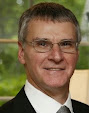
By Zahi Khouri
The New York Times
September 9, 2009
Israeli Prime Minister Benjamin Netanyahu has long tried to substitute the slogan of “economic peace” for genuine progress with the Palestinians on the political front.
Yet the International Monetary Fund’s projected growth of 7 percent in the West Bank for 2009 is largely the result of Palestinian reforms undertaken in spite of the obstacles Israel continues to place in the way of Palestinian development.
Too many in the West remain unaware of the impediments to economic development — not to mention political freedom — we Palestinians continue to face.
Some Israeli checkpoints have been dismantled, but any Palestinian businessman will tell you that with over 600 checkpoints and roadblocks still scattered across the West Bank, we remain in a tenuous economic position.
Few domestic or foreign investors are willing to invest in the Palestinian economy, and many Palestinian businessmen holding passports of friendly countries, even the United States, are being denied passage through Israel.
The economy of the West Bank has deteriorated over the past decade as a result of Israeli restrictions on Palestinian movement, which severely hamper trade and labor mobility.
These restrictions, combined with Israel’s fragmentation of the West Bank, remain the greatest impediment to economic development in Palestine. This includes Israel’s forced isolation of occupied East Jerusalem, long the economic heart of Palestine, from the rest of the West Bank.
According to a June 2009 World Bank report, real G.D.P. in the occupied Palestinian territory has declined by a “cumulative 34 percent in real per capita terms” since September 2000. Given this, even the most minimal Israeli gestures cannot help but bring improvement.
The I.M.F.’s projected growth, however, will be a one-off (as was growth in 2006) if Israel fails to improve the prospects for Palestinian trade and development.
As Oussama Kanaan, the I.M.F. chief of mission in the West Bank and Gaza, stated, “If the relaxation of Israeli restrictions does not continue in the remainder of the year, real G.D.P. per capita would decline further in 2009, along the same trend started in 2006.”
Palestinian Prime Minister Salam Fayyad made a similar point when he asserted, “The Israeli restrictions still pose obstacles to the improvement of the economy.” In other words, 7 percent growth is no sure thing.
In any case, Palestinian economic growth is not a substitute for serious and meaningful negotiations aimed at ending Israel’s occupation and establishing an independent, viable and sovereign Palestinian state.
I am all for economic improvement, but not as a substitute for peace — nor its manipulation by Mr. Netanyahu to manage and normalize the occupation while trying to sell Israel’s benevolence to the rest of the globe. Self-determination and statehood alone hold the keys to unlocking Palestine’s economic potential.
I monitor Mr. Netanyahu’s economic and political intentions closely because in 1995 I left a comfortable life on Park Avenue in Manhattan to become the founder and chief executive of the Palestinian National Beverage Co.
Initially, the undertaking thrived. We continue to employ over 300 Palestinians, but we have struggled in recent years as a consequence of Israeli restrictions. Mr. Netanyahu’s economic and political dictums determine whether we grow or contract. He wields this immense power over us, although Palestinians in the West Bank and Gaza had no role in his election.
The foundation upon which our economy rests is dangerously rotten. Israeli spreading settlements, checkpoints and roadblocks that fragment the occupied Palestinian territory; Israel’s illegal Wall and its permit system that severely restrict where Palestinians can live and work; and Israel’s continuing siege of Gaza all not only threaten our nascent economic recovery, but threaten the very possibility of a two-state solution.
The alternatives to a two-state solution are either an apartheid state, which is unacceptable to Palestinians, or one binational state, which Israeli Jews reject.
Mr. Netanyahu is selling us a bill of goods with the claim he can manage the situation with economic improvement. He is wrong. Without a political outcome that secures Palestinian territorial rights, including East Jerusalem as the Palestinian capital, and a just outcome for refugees, more conflict lies ahead.
President Obama recognizes this. President Mahmoud Abbas recognizes this. Yet Mr. Netanyahu somehow thinks he can charm Palestinians, who are daily reminded of the occupation under which they suffer, with a 7-percent growth bubble.
If President Obama wants to be a real friend to Israelis and Palestinians, he must insist that Israel stop settling Palestinian land in the West Bank, including East Jerusalem, and abide by international law.
A settlement freeze is a crucial first step to salvaging the two-state solution, as well as Israel’s credentials as a genuine partner for peace. Seven-percent growth and an illusionary calm are no substitute for this.
Zahi Khouri is the chief executive of the Palestinian National Beverage Co.
Showing posts with label economic development. Show all posts
Showing posts with label economic development. Show all posts
Thursday, September 10, 2009

Wednesday, August 19, 2009
Why is Israel limiting movement of Palestinian-Canadian businessman?
By Amira Hass
Ha'aretz (Israel)
August 19, 2009
Mohammed Sabawi, 65, could have played a leading role in all the stories about the economic revival in the West Bank's cities. His goal of "strengthening the economy of Palestine by utilizing its own capabilities" sounds like Prime Minister Benjamin Netanyahu's vision of "economic peace." In recent months, however, the Palestinian-Canadian businessman has been considering reducing his business activity here, after Israel started limiting his freedom of movement and that of his son and business partner, Khaled. The Sabawis are considering Cyprus as an alternate location.
For 15 years, Sabawi entered and left the country with no problems, as a senior partner in an insurance company and as chairman of a construction company. But in April, he was denied entry at Ben-Gurion International Airport.
"Next time enter by way of the Allenby Bridge," said the Interior Ministry official, after the coordinator for economic affairs at the Israeli Civil Administration in the West Bank convinced authorities not to put the Canadian citizen on a plane back to Istanbul. He wasted seven hours at the airport, left the country, and returned on June 2 via the Allenby Bridge, without looking at what was written in his passport. It was only a few days later, on his way to a meeting with Israeli business people, that he realized his visa was valid "only for Palestinian Authority territory." When he arrived at the Hizme checkpoint northeast of Jerusalem, driving a car with Israeli license plates, the soldier there leafed through his passport and told a surprised Sabawi that he had to turn back.
Sabawi purchased $500,000 in products and services from an Israeli software company. His company cars are Israeli. Many of his company's suppliers — machinery, raw materials, etc. — are Israeli, both the importers and the manufacturers. Many Israelis have shown an interest in the subsidiary headed by his son, which develops advanced green technology for heating and cooling homes through use of the ground temperature, but the Sabawis, both Canadian citizens, are barred from meeting with them.
Sabawi was born in 1944 in the village of Salame, now South Tel Aviv, and was expelled to Gaza in 1948 with his family. He later moved between Kuwait and Egypt, always as a second-class stateless person. In 1987, when Khaled was 4, he moved to Canada with his family. For the first time, he felt like a full-fledged citizen there. He became a member of the board of trustees of the Peres Center for Peace when it was founded in 1996, and participated in three or four meetings, until they stopped due to the outbreak of the second intifada.
Sabawi had to transfer his insurance company's Gaza headquarters to Ramallah, because after the 2005 disengagement, Israel made it almost impossible for foreign nationals to enter Gaza. That year, he and other Palestinian and Arab business people established UCI, a Ramallah-based construction and investment company, with $40 million in capital. Two years ago it moved to permanent offices in a new building, "the greenest in Ramallah," says Khaled. It is equipped with geothermal air conditioning.
They are currently completing construction of a residential subdivision in northern Ramallah, three kilometers from Bir Zeit University. The neighborhood has 62 semi-detached homes, a sports center, pool, a playground and a commercial center. They also intend to install geothermal systems in buildings they are planning in other residential neighborhoods in the West Bank and Gaza.
This is all on the condition that they can stay in the country. Khaled, 25, is an engineer specializing in energy. He joined his father in Ramallah two and a half years ago and heads their subsidiary MENA Geothermal. He expresses a mix of enthusiasm, pride, frustration and concern. MENA is the only company of its kind in the Middle East and North Africa, including Israel. His green technology specialization requires Khaled to travel frequently, so the tourist visas he received every time he arrived over the past few years didn't bother him.
In January, however, everything got more complicated. That month, he returned from an international conference in Abu Dhabi on future sources of energy. He and a manager at the company, another Palestinian Canadian, came to the Sheikh Hussein crossing between Jordan and Israel. They were denied entrance to Israel.
"We were in shock," Khaled said. "We were told: 'You spend too much time in Israel.' We told them: 'We work in Ramallah.' They told us: 'You are not allowed to work. You have tourist visas.' We told them: 'We'd be more than happy to have work visas, but we can't.'"
Khaled Sabawi sought to bring Canadian engineers to his "green" company in the West Bank, and they turned to the Israeli embassy in Canada to request work visas. They reported being told that that was within the purview of the Palestinian Authority. The PA, of course, said it was within Israel's authority. Israel, however, grants almost no work visas to foreigners working in the West Bank and the Gaza Strip, generally preferring to renew their tourist visas instead.
Khaled Sabawi and his manager were forced to return to Amman at night. His father called everywhere, until he reached the Civil Administration in the West Bank. He was promised the travelers could return via the Allenby Bridge. They tried a week later, but were turned away. In despair, they flew to Canada, where they managed the business remotely, staying awake at night for the Ramallah business day. After a month and a half of efforts and the Civil Administration's intervention, the younger Sabawi managed to return.
In April he got a one-week visa. On other occasions, he received a visa for a month. On June 29, he returned via the Allenby crossing from a Sharm el-Sheikh convention on renewable energy. He was again turned away — after waiting at the crossing for eight hours. After more telephone calls, promises and other efforts, he returned the next day, but his passport was stamped with a visa limiting his visit to a month and only to Palestinian Authority territory. Last week on another visit, he received the same visa, forcing him to cancel a meeting with an Israeli investor interested in a partnership.
Ha'aretz (Israel)
August 19, 2009
Mohammed Sabawi, 65, could have played a leading role in all the stories about the economic revival in the West Bank's cities. His goal of "strengthening the economy of Palestine by utilizing its own capabilities" sounds like Prime Minister Benjamin Netanyahu's vision of "economic peace." In recent months, however, the Palestinian-Canadian businessman has been considering reducing his business activity here, after Israel started limiting his freedom of movement and that of his son and business partner, Khaled. The Sabawis are considering Cyprus as an alternate location.
For 15 years, Sabawi entered and left the country with no problems, as a senior partner in an insurance company and as chairman of a construction company. But in April, he was denied entry at Ben-Gurion International Airport.
"Next time enter by way of the Allenby Bridge," said the Interior Ministry official, after the coordinator for economic affairs at the Israeli Civil Administration in the West Bank convinced authorities not to put the Canadian citizen on a plane back to Istanbul. He wasted seven hours at the airport, left the country, and returned on June 2 via the Allenby Bridge, without looking at what was written in his passport. It was only a few days later, on his way to a meeting with Israeli business people, that he realized his visa was valid "only for Palestinian Authority territory." When he arrived at the Hizme checkpoint northeast of Jerusalem, driving a car with Israeli license plates, the soldier there leafed through his passport and told a surprised Sabawi that he had to turn back.
Sabawi purchased $500,000 in products and services from an Israeli software company. His company cars are Israeli. Many of his company's suppliers — machinery, raw materials, etc. — are Israeli, both the importers and the manufacturers. Many Israelis have shown an interest in the subsidiary headed by his son, which develops advanced green technology for heating and cooling homes through use of the ground temperature, but the Sabawis, both Canadian citizens, are barred from meeting with them.
Sabawi was born in 1944 in the village of Salame, now South Tel Aviv, and was expelled to Gaza in 1948 with his family. He later moved between Kuwait and Egypt, always as a second-class stateless person. In 1987, when Khaled was 4, he moved to Canada with his family. For the first time, he felt like a full-fledged citizen there. He became a member of the board of trustees of the Peres Center for Peace when it was founded in 1996, and participated in three or four meetings, until they stopped due to the outbreak of the second intifada.
Sabawi had to transfer his insurance company's Gaza headquarters to Ramallah, because after the 2005 disengagement, Israel made it almost impossible for foreign nationals to enter Gaza. That year, he and other Palestinian and Arab business people established UCI, a Ramallah-based construction and investment company, with $40 million in capital. Two years ago it moved to permanent offices in a new building, "the greenest in Ramallah," says Khaled. It is equipped with geothermal air conditioning.
They are currently completing construction of a residential subdivision in northern Ramallah, three kilometers from Bir Zeit University. The neighborhood has 62 semi-detached homes, a sports center, pool, a playground and a commercial center. They also intend to install geothermal systems in buildings they are planning in other residential neighborhoods in the West Bank and Gaza.
This is all on the condition that they can stay in the country. Khaled, 25, is an engineer specializing in energy. He joined his father in Ramallah two and a half years ago and heads their subsidiary MENA Geothermal. He expresses a mix of enthusiasm, pride, frustration and concern. MENA is the only company of its kind in the Middle East and North Africa, including Israel. His green technology specialization requires Khaled to travel frequently, so the tourist visas he received every time he arrived over the past few years didn't bother him.
In January, however, everything got more complicated. That month, he returned from an international conference in Abu Dhabi on future sources of energy. He and a manager at the company, another Palestinian Canadian, came to the Sheikh Hussein crossing between Jordan and Israel. They were denied entrance to Israel.
"We were in shock," Khaled said. "We were told: 'You spend too much time in Israel.' We told them: 'We work in Ramallah.' They told us: 'You are not allowed to work. You have tourist visas.' We told them: 'We'd be more than happy to have work visas, but we can't.'"
Khaled Sabawi sought to bring Canadian engineers to his "green" company in the West Bank, and they turned to the Israeli embassy in Canada to request work visas. They reported being told that that was within the purview of the Palestinian Authority. The PA, of course, said it was within Israel's authority. Israel, however, grants almost no work visas to foreigners working in the West Bank and the Gaza Strip, generally preferring to renew their tourist visas instead.
Khaled Sabawi and his manager were forced to return to Amman at night. His father called everywhere, until he reached the Civil Administration in the West Bank. He was promised the travelers could return via the Allenby Bridge. They tried a week later, but were turned away. In despair, they flew to Canada, where they managed the business remotely, staying awake at night for the Ramallah business day. After a month and a half of efforts and the Civil Administration's intervention, the younger Sabawi managed to return.
In April he got a one-week visa. On other occasions, he received a visa for a month. On June 29, he returned via the Allenby crossing from a Sharm el-Sheikh convention on renewable energy. He was again turned away — after waiting at the crossing for eight hours. After more telephone calls, promises and other efforts, he returned the next day, but his passport was stamped with a visa limiting his visit to a month and only to Palestinian Authority territory. Last week on another visit, he received the same visa, forcing him to cancel a meeting with an Israeli investor interested in a partnership.
Subscribe to:
Posts (Atom)